From Regional Dialogue to Actionable Reports
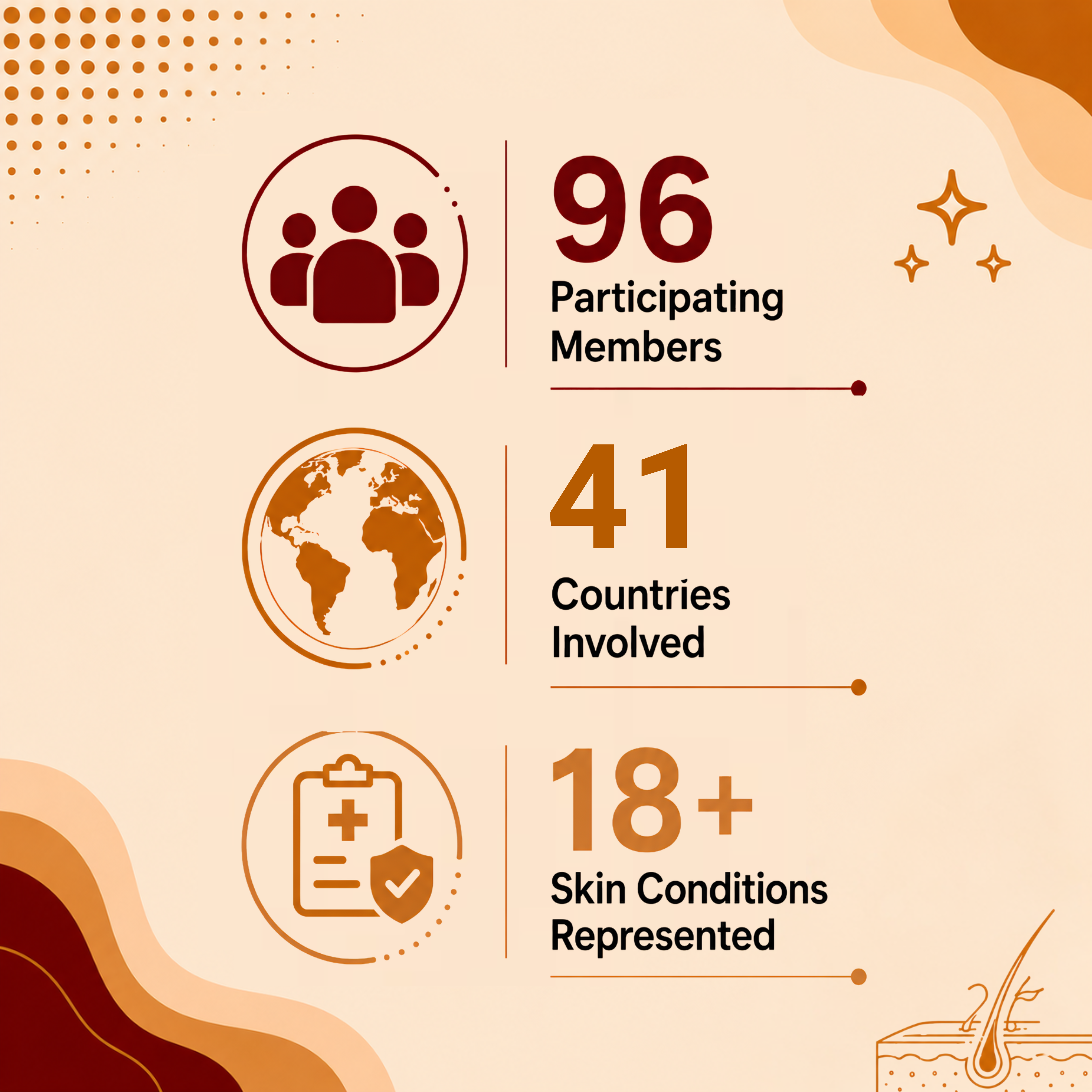
In early 2026, GlobalSkin launched the Regional Engagement Workshop Series to bring our patient organization Members together across all six World Health Organization regions. Through facilitated virtual discussions, Members shared experiences, identified skin patient priorities, explored health system challenges, and discussed opportunities to strengthen national and regional advocacy.
The findings gathered through the Regional Engagement Series have been synthesized into a set of regional reports that serve two complementary purposes. First, they equip individual Member organizations with evidence-based insights to strengthen their advocacy efforts within their own countries and communities. Second, they provide GlobalSkin's Regional Networks with a shared resource that supports coordinated, collective action on regional priorities.
To check out what we heard across all regions, click here.
Cross-Priority Regional Themes
 Political Priority and Data Systems
 Education, Awareness and Patient Leadership
 Workforce, Geography and Financial Barriers
 Multidisciplinary and Integrated Services
Download the Reports
The regional reports provide a summary of the key themes, priorities, challenges, and recommendations identified by Members in each region. Click below to explore the regional report of your choice. To discover how the reports can support your work and strengthen your advocacy efforts, click here.


What We Heard Across All Regions
 Skin conditions are deprioritized by governments and excluded from national health agendas.
 Reliable prevalence data, disease registries, and research infrastructure are lacking throughout.
 Specialist shortages and geographic inequity leave rural and underserved populations without care.
 High costs, insurance gaps, and unaffordable treatments force patients to abandon care.
 Care is siloed without integrated pathways or effective multidisciplinary collaboration.
 The psychosocial burden of skin disease is underestimated and underserved in every region. Cultural stigma drives social exclusion and deters patients from seeking care.
 Patients lack accessible, culturally appropriate information, and patient organizations are under-resourced and underutilized.
How You Can Use the Reports to Support Your Work
 Unlock the power of regional findings and recommendations within the reports to strengthen your advocacy efforts with policymakers, government officials, and health authorities. The reports provide patient-informed evidence that can support discussions around improving access to care, promoting earlier diagnosis, and advancing stronger skin health policies. These insights also offer a strong foundation for supporting implementation of the World Health Assembly Resolution on Skin Diseases and development of the Global Action Plan.
 Leverage the reports to educate audiences about the burden of skin diseases by sharing key statistics, recommendations, and patient perspectives through awareness campaigns, presentations, newsletters, websites, and social media. The regional insights can help illustrate the real-world experiences of people living with skin diseases and can aid in the development of educational resources tailored to your local community.
 Refer to the reports for identifying emerging regional trends, advocacy priorities, and areas of unmet need that can inform your organization's strategic planning. The findings can provide credible evidence to strengthen funding applications, grant proposals, and project development.
 Use the reports to drive meaningful collaboration with healthcare professionals, researchers, partner organizations, and other stakeholders. They reports provide a shared evidence base for discussions, meetings, conferences, and workshops, and can serve as a useful resource for discovering opportunities to join hands with like-minded organizations within your region on initiatives of mutual interest.
 Use the reports to see how your region's experiences compare with those of patient communities around the world. By bringing together diverse patient perspectives, the reports provide an evidence base on shared priorities and regional differences that will enable Members and Regional Networks to learn from one another, identify successful approaches, and help build a stronger, more coordinated global movement for skin health.